Tohlim
The Deer KingTohlim, once the supervisor of Aquafa’s salt mine, is valued both for his command of the mine and for his broad knowledge of Aquafa. Remembered by Yotalu from childhood and praised by Hohsalle as a guide, he becomes an important source of information during the search for Van: he explains why Van’s reputation makes an inexperienced tracker a poor choice and recommends Sae instead. His small but consequential role connects practical knowledge of a place to a wider understanding of its people and history.
Identity and Reputation
Tohlim is introduced as the king’s confidant and as a figure known as the “living encyclopedia of Aquafa.” The description establishes him as more than a specialist: his standing rests on an unusually broad knowledge of the country. He is also identified as the salt mine’s former supervisor, giving that reputation a concrete setting and a practical dimension. The mine is not merely a place he knows from hearsay; he once held responsibility for it.
His title and the respect it commands are confirmed in the encounter with Yotalu. Yotalu recalls that his grandfather called Tohlim the walking encyclopedia of Aquafa, and remembers meeting him when he was twelve or thirteen. Tohlim responds with deference, saying that he had not expected Yotalu to remember him. The exchange presents Tohlim as a long-standing presence whose expertise preceded the current investigation, while also showing how knowledge and personal memory persist across generations and changes in authority.
Return to the Salt Mine
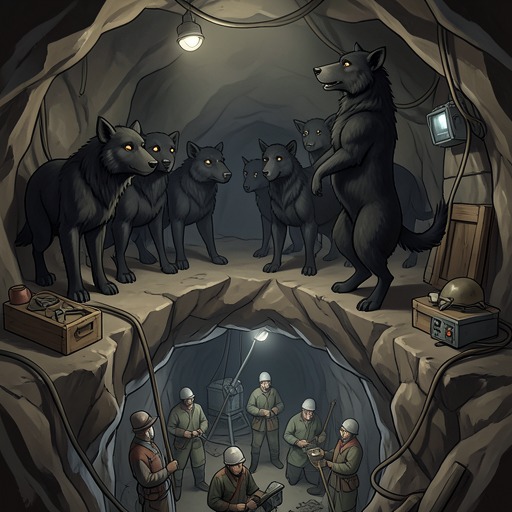
When Hohsalle, Makokan, and Yotalu need to go through the mine, Tohlim is chosen to lead them. Yotalu greets him by name and recalls his former position; he also observes that the mine had been kept in better condition when Tohlim supervised it. That remark links Tohlim’s authority to the mine’s past upkeep, even as the group enters it under changed circumstances.
Makokan initially wonders why Yotalu has asked this elderly guide to lead them, and briefly suspects that he is the only one who does not know Tohlim. Hohsalle clears up the disparity: this is Makokan’s first meeting with him, while Tohlim’s local expertise makes him an especially suitable guide. Tohlim accepts the task graciously and offers to lead the party through what he calls the Gem of Aquafa. The meeting thus establishes his role through both reputation and action: the visitors need his knowledge to navigate a site he once managed.
Knowledge of Van and the Search
Tohlim’s usefulness extends beyond the physical layout of the mine. As the group discusses Van, he describes the methodical character of Van’s fighting and the response it provoked among both clansmen and Zolians. Van, he says, did not rely on flashy displays of strength; he went directly after the opposing leader, even when that commander was screened by hundreds of men. The clansmen cheered when Van prevailed, while the Zolians hated him for the same effectiveness.
Tohlim connects that reputation to Van’s fate after the Battle of the Kashuna River. Van was the only survivor, but rather than execute him, the Zolians enslaved him and chained him in the depths of the salt mine. Tohlim concludes that if the escaped man is Van, he will be difficult to catch. His account turns the discussion from a search for an anonymous fugitive into an assessment of a capable opponent whose history and tactical habits matter to the pursuit.
Advice and Narrative Significance
Hohsalle hopes to avoid making Van wary or hostile, and recognizes that sending an inexperienced tracker could complicate the search. Tohlim agrees with that concern and recommends Sae, describing her as intelligent and able to handle the situation. The recommendation is grounded in his understanding of both the person being pursued and the demands of the pursuit: his counsel helps the group choose an informed approach rather than rely on force or guesswork.
Tohlim’s brief appearances therefore bring together two forms of expertise. His former supervision makes him a practical guide through the salt mine; his memory of local history and reputation makes him a guide to the people and conflicts attached to it. Around him, the mine becomes more than a setting for the search: it is a place where Aquafa’s past and the consequences of conquest remain active in the present. His contribution is not to take over the pursuit, but to make its stakes and choices more legible to those conducting it.